
Mapping the Human Retina Fast-Tracks Vision Research
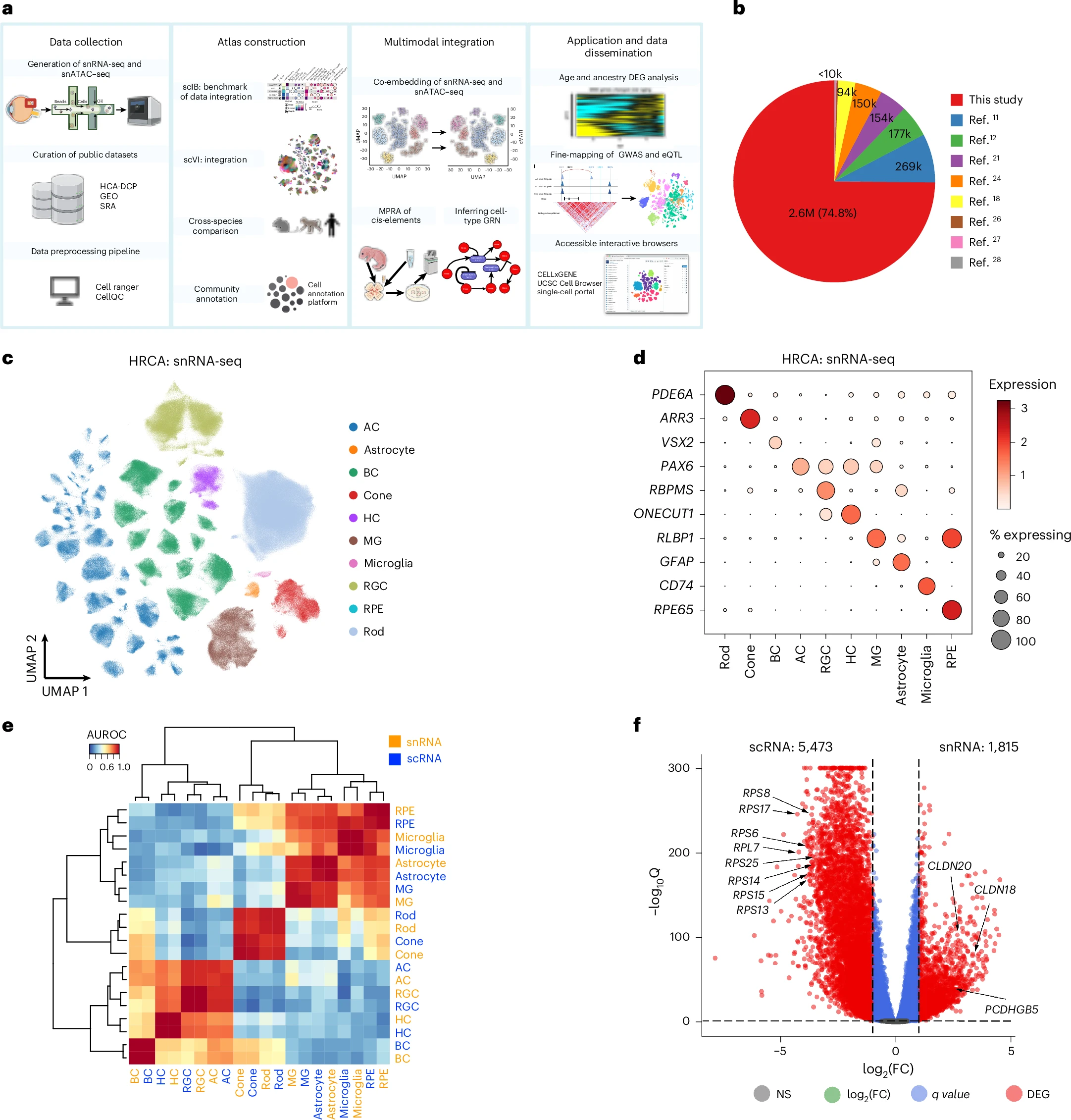
Our lab has built the most detailed map of the human retina ever created, offering a powerful new tool for understanding vision and eye disease. By analyzing nearly four million individual retinal cells from 125 donors and combining data from studies around the world, we identified more than 130 distinct types of cells that make up the retina.
Developed as part of the global Human Cell Atlas initiative, the new atlas shows how retinal cells differ across age, ancestry, and different regions of the eye. This detailed view helps researchers better understand how the healthy retina works, how it changes with age, and how genetic factors contribute to vision disorders.
Published in Nature Genetics, the study was led by researchers including Rui Chen, Jin Li, Jun Wang and Yumei Li in collaboration with an international team. The atlas is expected to speed up discoveries that could lead to improved diagnosis and treatment of eye diseases.
The research was supported primarily by the Chan Zuckerberg Initiative.
Previous post
Our Lab Becomes First U.S. Site to Deploy Pyxa™ 3D Spatial Transcriptomics System